
Safe Storage at Home: A Practical Checklist
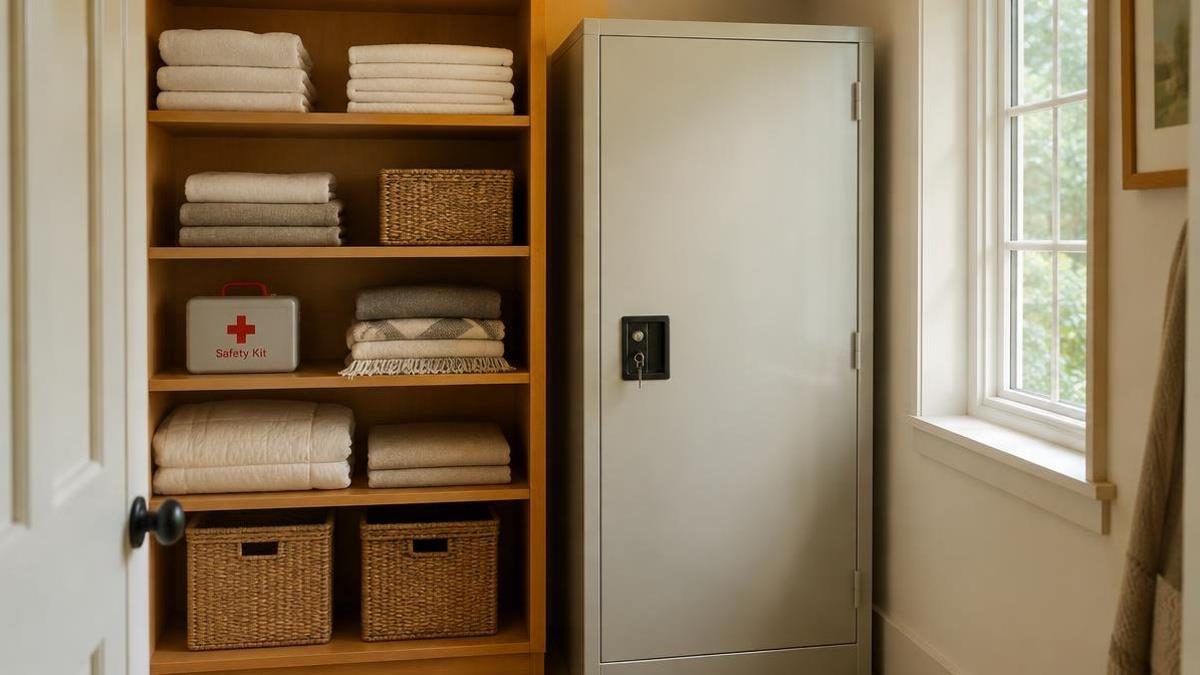
This article is considered through the lens of the Hawaii Rifle Association’s work of on-going education and community support for responsible firearm ownership, marksmanship, safety and the sport of shooting, for affiliated clubs and their members. A single notification or event occurs within a network of other notifications, dates and decisions made by people in support of safe shooting sports for participation by all island residents.
Action items need to be acted upon within a time frame and, when club members are involved, require information that others would need to know in order to complete an action and attend club events. Having the information in a note or article serves no purpose unless the information is used to complete an action or inform others in a timely manner. The readers’ efforts in studying the information would be worthless unless the information leads the readers to complete an action or inform others in a timely manner.
With respect to location and other local factors, what works for one club may not work for another located on a different island with different shooting facilities and with different household and family schedules. So while the association may maintain high safety standards, it is also important to maintain realistic standards and to clearly communicate what is required for responsible gun ownership and shooting.
Start with the household routine
Keeping safety a part of normal, daily routine is far more powerful than even the best of equipment. Determine where all firearms and gear will be stored, who will have access, how stored equipment will be retrieved using keys or combinations, and what actions will be taken when children or visitors are present. The best plan will fail when we rely on perfect human behavior in the most chaotic of times.
Use layers instead of one promise
Having a secure storage container is important but having several layers of protection is better. Having safe ways to handle firearms as well as storing them unloaded is important as well as communicating with others where firearms are stored. Regularly checking the storage of firearms is also important as well as checking after there have been changes in your home such as after you have moved, had a child, or got new equipment.
Practise the conversation
Telling family and club members that you can talk about firearms in a normal, non-embarrassing way is key. Give clear, developmentally-appropriate explanations of rules, identify the appropriate adult to contact in case of an emergency, and review regularly as children grow. Commands and ceasefires at the range should also be communicated clearly and frequently.
A short checklist for members
- Confirm date, location, and information source before circulating information to others.
- Ask one specific question when a detail is unclear.
- Remember to keep safety, courtesy and local rules as the cornerstone for your decisions.
- Record what you learned so the next member does not have to start over.
- Follow up with the club, committee, or association contact when an action is requested.
Closing note
The cornerstone of the association’s work is typically conducted within the confines of a meeting or event and in these instances, simple and effective work are key to building trust and respect within the shooting sports community. As such, this article will serve as a foundation for the practical application of your association’s work and be adaptable enough to apply to meetings, storage, shoots, legislation, and the history of your association.
What this article adds
The single most important safety decision that a firearm owner can make for the storage of firearms at home is how he or she decides to store them. A simple review of the way that you store your firearms at home could be more valuable than the best firearm that you purchase. Most firearm accidents at home involve a firearm that has been accessed by someone when they were not supposed to have access to it. Storage of firearms at home needs to prevent access by all others, especially children, not just hide them from sight.
The safest characteristic of a firearm is that it is stored in storage. Deciding on a proper storage setup for your firearms and ammunition at home is more important to the safe use of firearms than the purchase of any particular firearm. Most firearm accidents in the home involve a firearm that was left unlocked and was retrieved by chance or by accident by an unsuspecting family member or visitor. A simple review of your current storage setup could save you from a great deal of pain. Storage for your firearms at home begins with a list of all people that live in your home and all guests that visit your home. Next, determine the best method of storage for each of your firearms to ensure that they are unloaded and locked to prevent accidental discharge by children and others. It is wise to store your ammunition separately from your firearms and to verify that your locked container is in fact locked prior to leaving for work or travel every time. Review your storage setup after any change to your household. In terms of accident potential, changes to your home and your household are the most common events that can adversely affect your safely stored firearms and cause accidents.
Share this article with your club
Related Articles

HRA Announces 2026 Annual Members Meeting
Members across the islands are invited to the annual gathering for a review of the year, safety program updates and club reports.

Session Preview: Firearm Bills to Watch This Year
A plain-language look at the proposals most likely to affect lawful owners, clubs and range access in the coming session.

Junior Marksmanship Season Wraps With Strong Turnout
Youth participants completed a full season of supervised instruction, with families praising the discipline and confidence the program builds.